Ancient Chapel of Toxteth
Heritage & Conservation | Liverpool
The Ancient Chapel of Toxteth, a Grade I listed structure of significant historic importance, required a detailed measured building survey that would respect its heritage status whilst providing accurate spatial data for conservation planning. The building’s age, irregular geometry, and non-orthogonal layout presented unique challenges that demanded both technical precision and a sensitive, non-invasive approach.
As a structure that has evolved over several centuries, the chapel exhibits varying wall thicknesses, subtle changes in floor and roof levels, and architectural features characteristic of its historical development. Any survey methodology would need to capture these complexities without physical interaction that could compromise the integrity of the historic fabric.
The survey outputs would need to be suitable for use by architects, conservation specialists, and heritage bodies, forming a reliable baseline for future repair, alteration, or historical analysis.
NTB Survey was commissioned to produce a comprehensive measured building survey comprising:
The deliverables needed to provide a clear and reliable record of the chapel in its current form, with particular attention to the non-orthogonal layout and irregular geometry that define the building’s character. The three-dimensional understanding of spatial relationships was essential, especially given the varying wall thicknesses and subtle level changes throughout the structure.
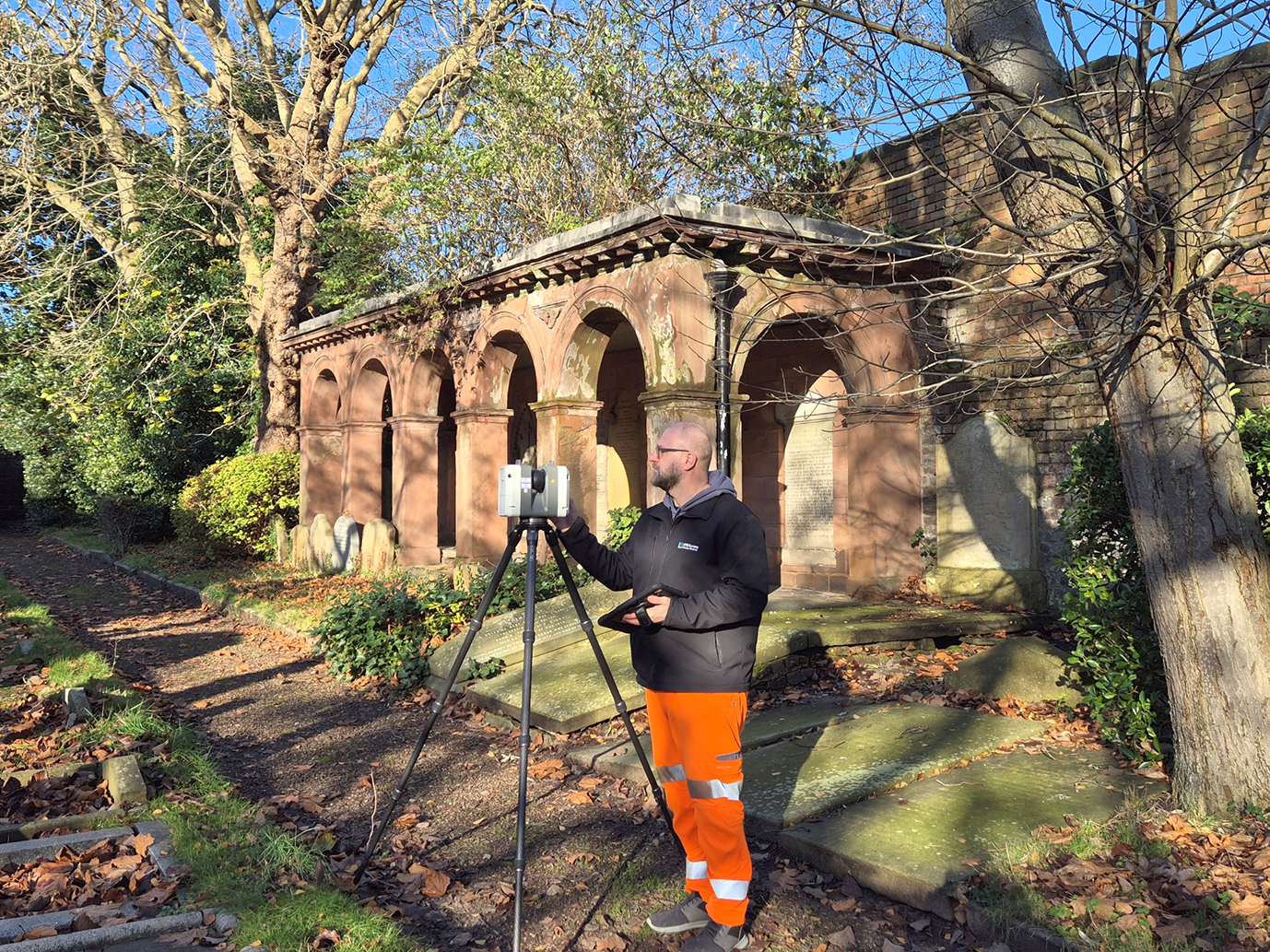
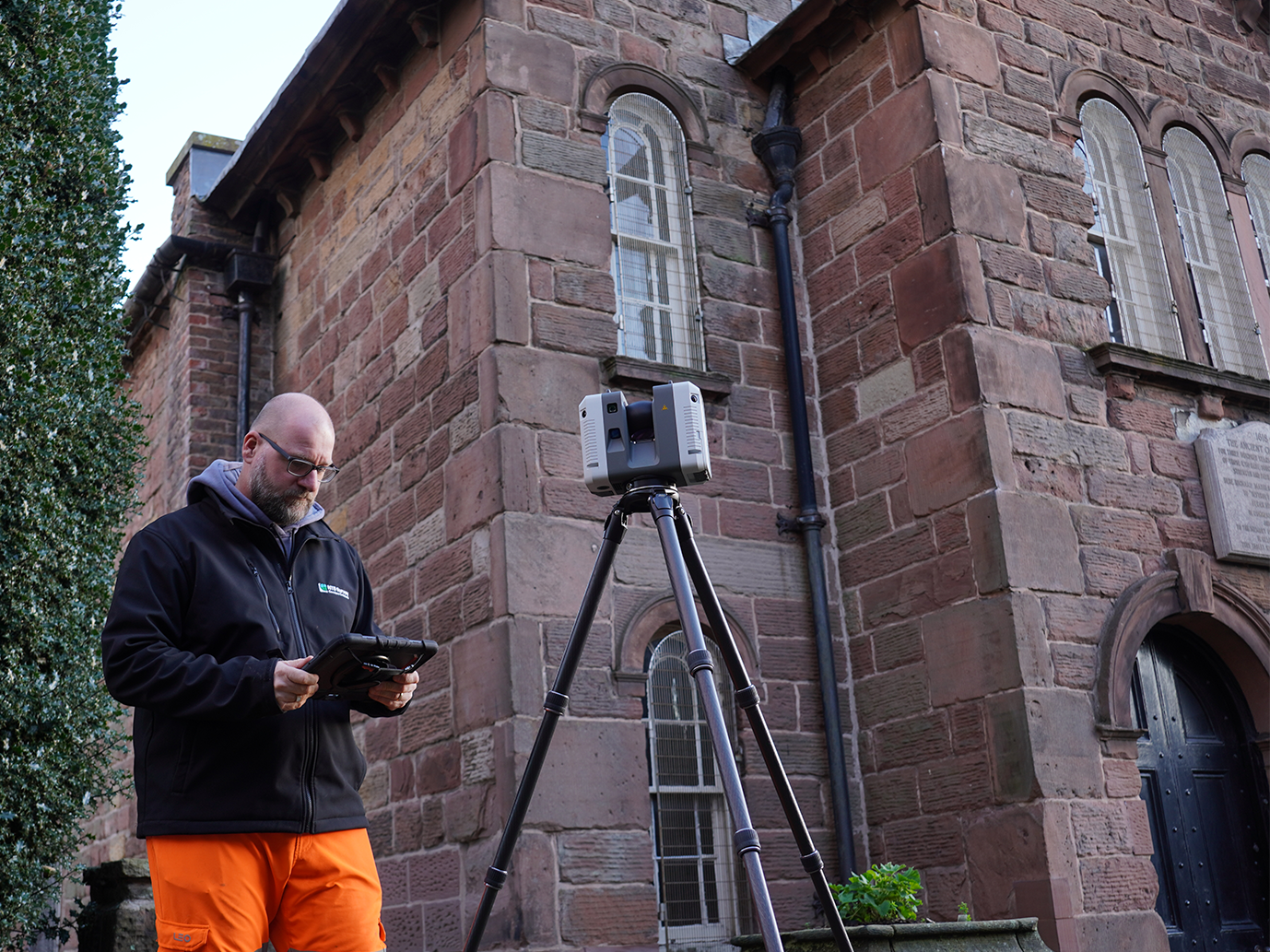
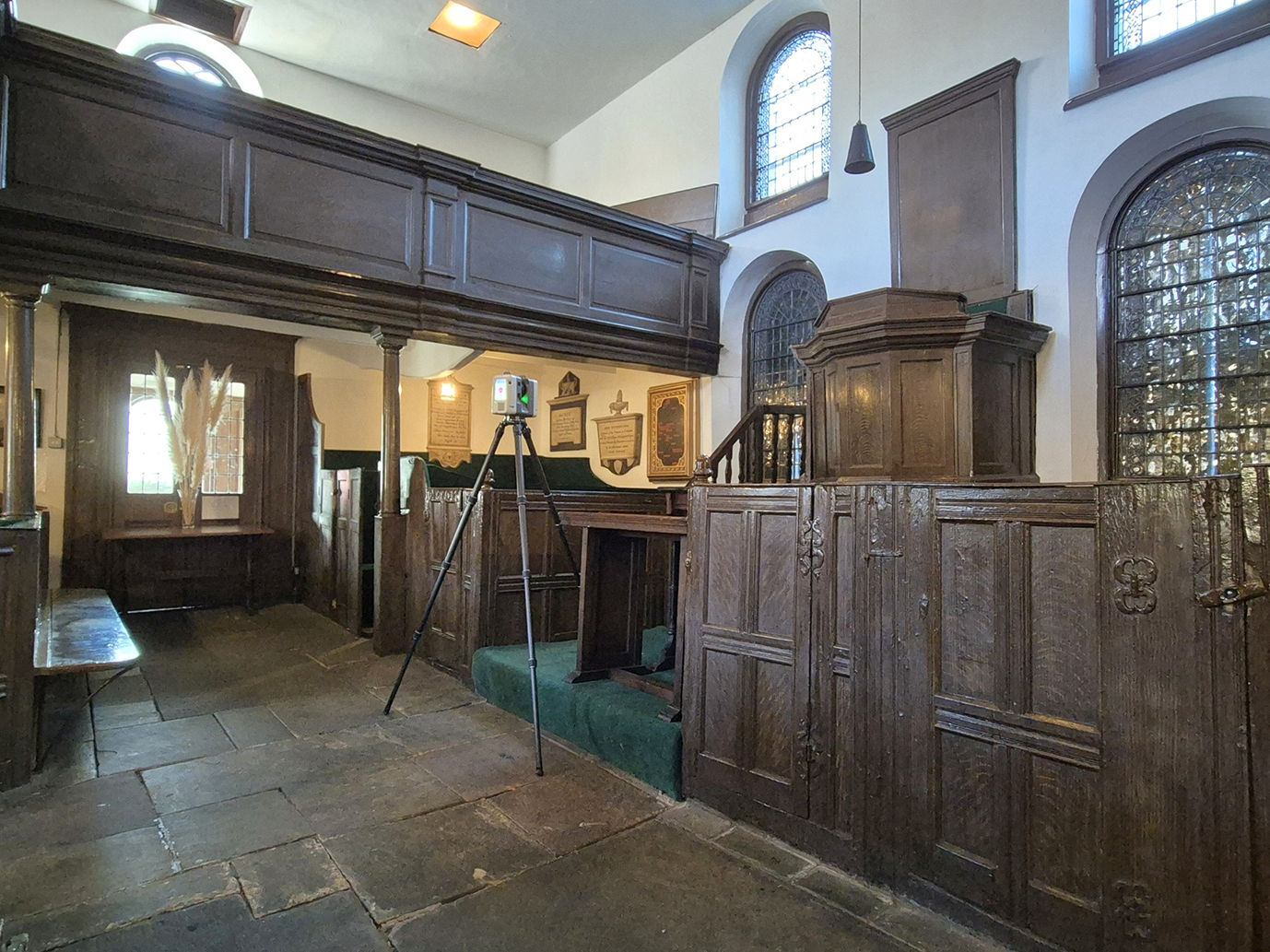
Given the historic significance of the building and the need for minimal physical interaction, we deployed a Leica RTC360 terrestrial laser scanner to capture the data. This technology enabled the rapid acquisition of high-density point cloud data, ensuring both precision and efficiency whilst respecting the integrity of the historic fabric.
The scanner was positioned at carefully selected locations throughout the interior and around the external perimeter. This allowed us to capture internal spaces, external façades, roof geometry, and all key architectural features with minimal time on site and no physical contact with the structure. The non-invasive nature of laser scanning was particularly important for a Grade I listed building where traditional survey methods involving direct measurement could pose risks to historic materials.
The resulting point cloud dataset provided a complete three-dimensional record of the chapel, capturing the irregular geometry, varying wall thicknesses, and subtle level changes that characterise the building. This data formed the basis for all subsequent CAD work.
Once the point cloud was registered and processed, we used it to produce detailed drawings in CAD software. The floor plans were drafted to clearly show the building’s spatial arrangement and non-orthogonal layout. External elevations were produced for all façades, accurately representing openings, buttresses, material boundaries, and architectural details.
The roof plan was produced to define ridges, slopes, and perimeter extents, supporting future inspection, maintenance, and conservation planning. Cross sections were carefully positioned to convey changes in floor level, roof structure, and wall construction, providing the dimensional information necessary for structural assessment and heritage analysis.
Throughout the drafting process, particular attention was paid to accurately representing the building’s irregular geometry and historic features, ensuring the drawings would serve as a reliable baseline for conservation specialists, architects, and heritage bodies.
A complete set of measured building survey drawings was produced and delivered in both .DWG and PDF formats. All drawings were produced in line with NTB Survey’s CAD standards and layering systems, enabling architects and engineers to easily integrate the survey data into their design software. The level of detail provided ensures the drawings can support conservation planning, structural assessment, maintenance scheduling, and future alterations whilst serving as a permanent record of the building’s current condition.
We Delivered:
Detailed floor plans showing internal layout, wall thicknesses, and spatial arrangement
Full external elevations for all façades, accurately representing architectural features
A roof plan defining ridges, slopes, valleys, and perimeter extents
Cross sections positioned to illustrate changes in level and structural form
Accurate recording of openings, buttresses, material boundaries, and historic details
The survey outputs have provided a robust foundation for conservation planning and future works at the Ancient Chapel of Toxteth. The detailed drawings enable architects, conservation specialists, and heritage bodies to make informed decisions based on accurate spatial data.
The non-invasive methodology ensured the historic fabric was fully respected throughout the survey process, whilst the high-density point cloud data captured every detail of this significant Grade I listed structure. The resulting drawings form a permanent record that will support the ongoing care and preservation of this important historic building.
At NTB Survey, we understand that heritage buildings demand a careful and considered approach. Our use of modern laser scanning technology allows us to capture the most complex historic structures with precision and sensitivity, delivering survey data that conservation professionals can rely upon.